The auto-battler genre represents a specialized branch of digital strategy design in which tactical preparation replaces direct unit control during combat. Within this genre, Teamfight Tactics (TFT) demonstrates a layered architecture that integrates board positioning, probabilistic unit acquisition, and automated battle resolution. The structural design of TFT differs from conventional strategy systems by separating planning phases from execution phases, allowing outcomes to emerge from predefined interactions rather than real-time commands.
This structural model creates a closed system in which resource management, unit synergy frameworks, and algorithmic combat resolution interact continuously across rounds. Each subsystem contributes to a cyclical gameplay architecture that defines the operational flow of the TFT environment. Understanding this architecture requires examining the structural outline of the system, the operational sequence through which matches unfold, and the external influences within the TFT axis that shape its evolution.
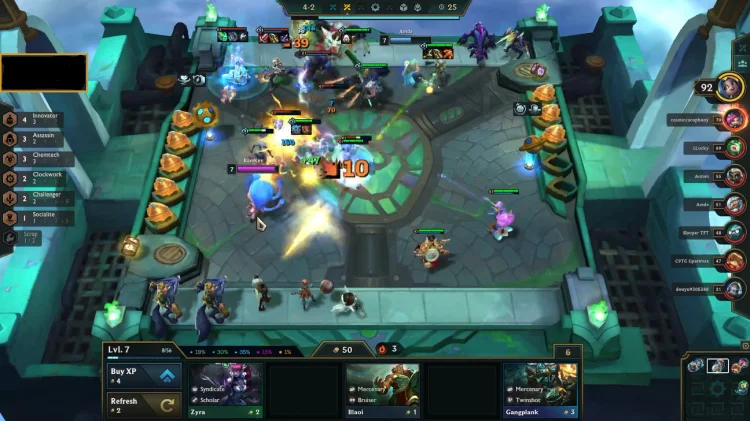
Structural Outline
At its structural core, the TFT auto-battler system is composed of three interconnected layers: acquisition mechanics, board configuration, and automated combat simulation. These layers operate sequentially but remain interdependent, creating a system in which strategic preparation influences algorithmic outcomes.
The acquisition layer governs how playable units enter the system. Units are distributed through a probabilistic shop mechanism that draws from a shared pool. Each unit belongs to predefined traits and cost tiers, which determine both availability and statistical strength. This shared pool architecture introduces controlled scarcity, ensuring that unit distribution across participants is influenced by global availability rather than isolated randomness.
The configuration layer centers on spatial placement and trait activation. Units are arranged on a hexagonal grid, a structural choice that facilitates positional relationships such as adjacency, front-line protection, and ranged attack corridors. Traits function as modular rule sets that activate additional mechanics when specific combinations of units appear on the board. These traits represent a rule-based layer of the architecture, transforming unit composition into a systemic interaction network.
The final structural layer involves the combat engine. Once preparation phases conclude, the system resolves battles automatically through predefined behavior scripts and interaction formulas. Attack targeting, ability activation, and movement are controlled by programmed logic rather than manual commands. This automated resolution distinguishes the TFT architecture from traditional strategy frameworks and reinforces the emphasis on pre-battle decision structures.
Operational Flow
The operational flow of the TFT system unfolds through cyclical stages that repeat across successive rounds. Each cycle begins with a preparation phase in which units may be purchased, repositioned, or combined into higher-tier versions. Resource accumulation and experience progression occur simultaneously, forming the economic foundation of the system.
During this phase, the system calculates probabilities for the shop interface based on the participant’s current level. Higher levels increase the likelihood of higher-tier units appearing, thereby altering the strategic composition possibilities. This probabilistic adjustment forms a dynamic feedback loop between resource investment and unit acquisition potential.
Following preparation, the system transitions into the combat phase. At this point, the board configuration becomes locked, and the simulation engine executes the encounter between opposing boards. Units follow predetermined logic sequences: melee units advance toward targets, ranged units maintain distance where possible, and ability triggers occur once internal resource thresholds are reached. These thresholds are commonly governed by a resource meter that fills through actions such as attacking or receiving damage.
Damage calculations and status effects occur simultaneously across the simulation environment. The engine evaluates attack power, defensive attributes, trait effects, and item modifiers to determine combat outcomes. Because direct control is absent during this phase, the final result reflects the structural integrity of the earlier configuration decisions.
After combat resolution, the system updates health totals and redistributes resources for the next preparation cycle. This closed operational loop continues until only one participant remains, reinforcing the cyclical architecture that defines the TFT system.
External Influences within the TFT Axis
While the core architecture remains stable, the TFT system evolves through periodic structural modifications introduced across different sets and updates. These changes influence the composition of the unit pool, the behavior of trait mechanics, and the distribution probabilities governing acquisition systems.
One influential structural element involves the seasonal “set” framework used in TFT. Each set introduces a distinct collection of units and traits while preserving the foundational mechanics of the auto-battler system. This modular approach allows the underlying architecture to remain consistent while the surrounding content ecosystem undergoes transformation. As a result, the system maintains long-term structural continuity without relying on static gameplay elements.
Algorithmic balancing also represents an internal axis influence. Adjustments to unit statistics, trait thresholds, or probability distributions alter the emergent strategic environment. These modifications reshape viable board configurations without fundamentally altering the system architecture itself. In this sense, the TFT ecosystem operates as a living framework in which iterative updates recalibrate the relationships among components.
Technological infrastructure further contributes to the system’s architecture. The combat simulation engine must process simultaneous interactions among numerous units while maintaining synchronization across all participants. Efficient resolution algorithms ensure that automated battles remain consistent across different hardware environments and network conditions.
The structural architecture of the TFT auto-battler system therefore exists within a dynamic ecosystem of internal adjustments and content cycles. These influences do not replace the core framework but instead refine its operational parameters over time.
Summary
The structural architecture of the TFT auto-battler system is defined by the interaction of acquisition mechanics, spatial configuration, and automated combat resolution. Each component operates within a cyclical framework that alternates between preparation and simulation phases. Strategic decisions occur primarily during configuration stages, while outcomes emerge through algorithmic interaction during combat.
Within this framework, probabilistic unit distribution, trait-based rule systems, and spatial positioning collectively determine the effectiveness of a board configuration. Periodic content cycles and balancing adjustments reshape the strategic environment while preserving the underlying architectural model.
By separating planning from execution and embedding decision outcomes within automated systems, TFT illustrates a distinct structural interpretation of digital strategy design. The resulting architecture forms a self-contained ecosystem in which preparation, probability, and system logic interact to generate emergent competitive outcomes.